News
The 48-Team Football Frenzy: What 2026 World Cup Data Tells Us About the Pitch's "Goggled Gladiators"
June 12, 2026

The 2026 FIFA World Cup is officially here, and it is massive! With the tournament expanding to 48 teams and 104 matches, the game is faster and more physical than ever. The new format—12 groups where the top two and the 8 best third-placed teams fight their way into a brand-new Round of 32 knockout stage—means longer schedules and intense, non-stop pressure

Advanced tactical models highlight two major trends this summer: the "Elite Data Stream" and the "Generational Shift." Heavyweights like Thomas Tuchel’s England lead with a flawless clean-sheet qualifying record, Spain dominates possession with lethal wing-play, and France boasts the highest Expected Goals (xG). Meanwhile, it is the definitive "last dance" for legends Lionel Messi (38) and Cristiano Ronaldo (41), even as Spain’s 18-year-old sensation Lamine Yamal shatters metrics in successful dribbles. When athletes sprint at 30+ km/h tracking a ball traveling over 100 km/h, impeccable dynamic visual acuity becomes their ultimate weapon.
When players sprint at 30+ km/h while tracking a ball flying at over 100 km/h, impeccable dynamic visual acuity is their ultimate weapon. This leaves us wondering: How did the legendary " Goggled players " of the past pull it off?
The Legends Who Defied the Limits
Football history has seen a few brave icons conquer the pitch with vision protection: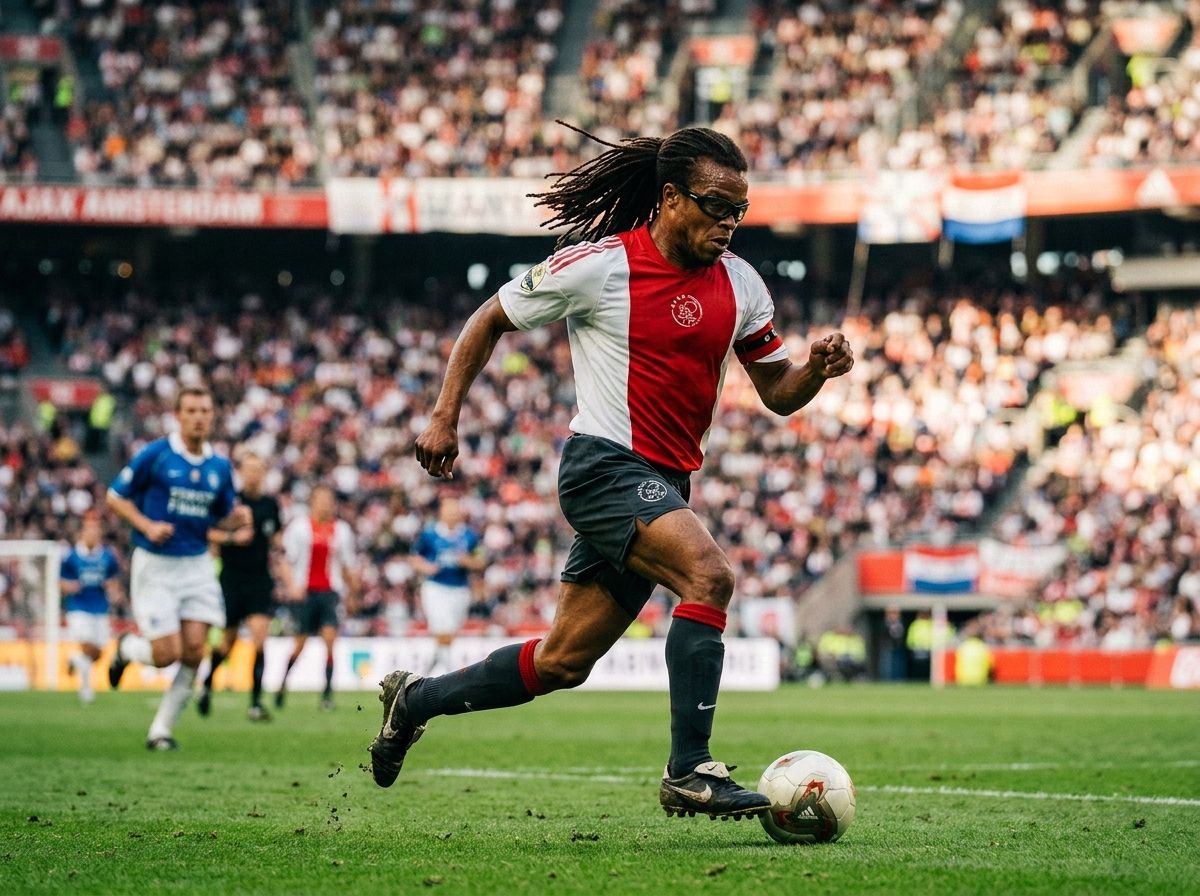
Edgar Davids: In the late 1990s, following glaucoma surgery, he got special FIFA clearance to wear sports goggles. Paired with his iconic dreadlocks, his streamlined eyewear became an instant cultural icon.

Annibale Frossi: Way back at the 1936 Berlin Olympics, this myopic forward won gold while wearing his round spectacles, secured only by a simple elastic band.
Today, even with contact lenses and laser surgery, the need for reliable eyecare safety and vision correction in high-impact sports remains as critical as ever.
Engineering the Ultimate Sports Goggle
From an industrial design and materials science perspective, protecting eyes from a 100 km/h ball impact is a massive engineering challenge.
To prevent secondary injuries during collisions, frames must feature a screwless, hingeless, co-molded structure. At the same time, lenses need high-tensile, shatterproof polycarbonate (PC) materials paired with deep-groove lens retention channels to ensure the lens never caves inward under heavy impact.
To solve this, Futureye engineered a high-performance sports goggle. The frame is injection-molded using ultra-light, flexible TR-90, while the nose pads and temporal zones use soft TPR (Thermoplastic Rubber) overmolding to absorb shock and protect the face.

Futureye's Turnkey OEM/ODM Solutions
Traditional optical inserts often cause fogging and geometric distortion. Futureye solves this with an Rx-ready design that accommodates direct-fit prescription lenses directly onto the main frame.
We also addressed the athlete's real-world pain points:
- Quick-Swap Strap Integration: Allows players to instantly replace sweat-soaked bands mid-game to stay fresh and comfortable.
- Anti-Slip Anchoring: Micro-textured, high-tack grips keep the goggles perfectly stable during heavy physical contact and headers.
As a premier global visual solutions partner for top-tier sports brands, Futureye offers complete, end-to-end OEM/ODM solutions—from conceptual industrial design to high-volume manufacturing. While athletes push limits on the pitch, Futureye delivers the ultimate safety and optical clarity they can trust.


Related Articles

FUTUREYE at ISPO 2026
Oct 6, 2026

Moon Festival
Sept 7, 2026

Futureye Company
- Tel | 886-6-2058638
- Mail | [email protected]
- Address | 3F-1,No. 18, Aly. 21, Ln. 279, Zhongzheng Rd.,
- Yongkang Dist., Tainan City 710003, Taiwan
Quick links
Resources
- Notice of patent right Copyright© Privacy Policy
Accreditation